


Hearts - Card Game Classic
4.55.97K Reviews
App Specs
- Version
- 2.3.3
- Updated On
- License
- Free
- Downloads
- 1,000,000+
- Developer
- FIOGONIA LIMITED
- Categories
- Card
- Platform
- Android, iOS
Screenshots
 Analysis by AppCompare
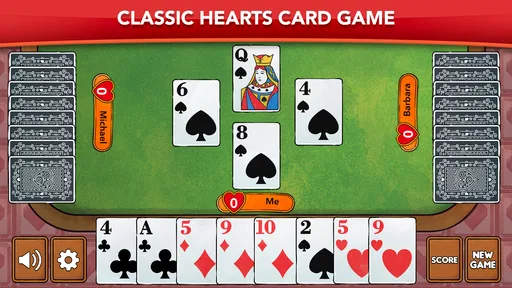
I like card games that explain themselves through play, and Hearts - Card Game Classic makes a strong first impression for exactly that reason. You sit down, look at the cards in your hand, decide what to pass, and then start reading the table. There is no complicated setup to learn before the first trick. The challenge comes from judging risk, remembering what has already been played, and deciding whether to take control or quietly avoid trouble.
This is a free card game from FIOGONIA LIMITED, aimed at Everyone and available for Android devices running at least Android 7.0. It has reached over a million installs, with a 4.5 average from around nineteen thousand ratings and roughly six thousand written reviews. Those figures suggest that it has found a dependable audience, but the more important question is whether its particular rhythm suits you. In my experience, it works best when I want a focused game that can fill a short break without demanding the attention of a larger strategy title.
Starting with one hand and learning the table
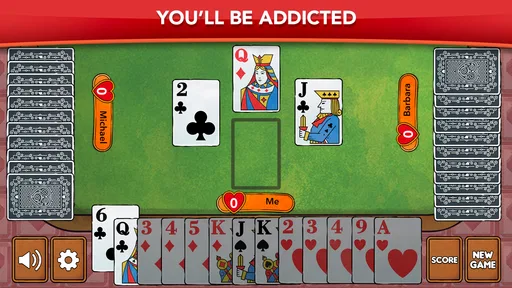
The first action is simple: inspect the hand and decide how aggressively to play it. Hearts is familiar to many players, but the decisions are rarely automatic. Passing cards changes the shape of the hand, and once the tricks begin, every lead gives information about what other players may or may not hold. I quickly found that the game rewards patience more than flashy moves.
That makes the opening minutes useful even if you already know the rules. A strong hand is not always comfortable, because holding high cards can force you to win tricks later. A weak-looking hand can also become manageable if you identify which cards are dangerous and avoid taking the lead at the wrong moment. The app gives the traditional game enough room to remain thoughtful rather than turning it into a rapid-fire matching exercise.
For a new player, the best approach is not to chase every trick. I recommend watching which suits disappear from the table and paying attention to who is forced to play a different suit. That information becomes more valuable than the cards you initially hoped to receive. If you are playing during a commute or while waiting for an appointment, this is a good level of mental involvement: enough to hold your attention, but not so much that you need a long uninterrupted evening.
The game is also approachable because a round has a clear purpose. You are not wandering through menus or building a collection before the real play starts. The hand itself is the activity. That directness is one of its biggest advantages over card apps that surround a basic game with layers of progression, daily tasks, or decorative systems.
Why the opening choices matter more than they seem
Passing is where I notice the difference between casually playing a hand and actually managing it. I try to remove a card that could trap me into winning an unwanted trick, but I avoid making the rest of my hand too predictable. Passing away a high card may feel safe, yet it can leave a suit distribution that becomes awkward later. The better question is not simply “Which card is worst?” but “Which card gives me the fewest unpleasant decisions after the pass?”
Worth Reading Before You Choose

EA SPORTS FC Mobile 26 Is a Bigger Football Game, but It Takes Time

Flipboard Shows What News Apps Must Do Beyond the Feed

Switching to Android Auto Means Rethinking Your Driving Routine

Google Calendar Makes a Crowded Week Easier to Manage

Ludo King Makes the Most of the Minutes Between Plans

Baby Panda World Brings Quick Play to Modern Phones, but Its Game Library Feels Busy
That small change in thinking is a useful tip for anyone coming from simpler games such as Solitaire. In Solitaire, the main challenge is usually arranging visible information. Here, some information remains hidden, so the goal is to make choices that stay flexible. I often keep a modest card in a suit that I expect to lose quickly, because being able to follow that suit early can help me avoid taking control later.
There is a trade-off, though. Players who want immediate action may find the early analysis slower than expected. Hearts is not a game where every turn produces an obvious reward. Sometimes the correct move is deliberately unexciting: play a low card, let another player win, and wait. If you prefer games built around constant upgrades or dramatic reversals, this restraint may feel flat rather than strategic.
How the feedback rhythm keeps each trick meaningful
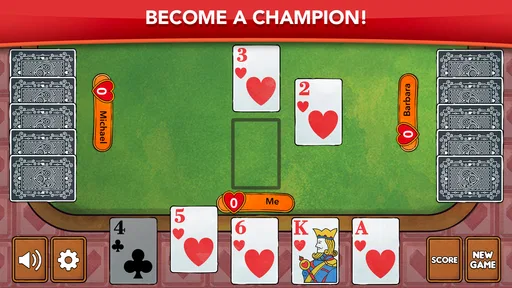
The feedback loop is built from small signals rather than big celebrations. I play a card, see who wins the trick, update my understanding of the remaining suits, and then prepare for the next lead. That cycle repeats with enough variation to keep the hand alive. A safe move can become dangerous two tricks later, while a card that looked threatening may become useful once the right suit has been exhausted.
What I enjoy most is the way the table gradually becomes easier to read. At the beginning, the hand contains possibilities. After several tricks, those possibilities narrow. I can remember who has shown a shortage in a suit, who may be holding high cards, and whether playing a heart now would expose me to a bad result. The app does not need to add artificial drama because the information itself creates tension.
This is also where the game differs from many casual card alternatives. A round of Uno-style play tends to emphasize immediate effects and visible reversals. Solitaire emphasizes planning around cards that are already exposed. Hearts sits between those experiences: it is easy to begin, but the best decisions depend on memory, probability, and reading the behavior of the other players at the table.
I would not describe every hand as equally satisfying. Sometimes the distribution of cards leaves little room to maneuver, and the result can feel determined before the final tricks. That is a normal limitation of this kind of game rather than a flaw unique to the app, but it matters if you want every session to feel like a test of pure skill. I judge the experience by the quality of the decisions available, and some hands offer more interesting choices than others.
A practical way to improve without turning it into homework
My most useful habit is to remember suits, not every individual card. When a player cannot follow the suit that was led, I treat that as a warning for future tricks. That player may be able to discard a troublesome card when another suit is led, so I avoid giving them an easy opportunity if I can control the lead. This is a more manageable system than trying to memorize the complete deck.
I also try to separate two goals that beginners often mix together: avoiding penalty cards and controlling the direction of the hand. Avoiding penalties is usually the priority, but taking a trick can sometimes protect you from a worse sequence. If I have a high card in a suit that is still active, I may choose to use it while I can predict the result instead of waiting until the table becomes more dangerous.
Another useful adjustment is to stop judging a move only by its immediate outcome. Losing a trick is not automatically bad, and winning one is not automatically good. The real feedback arrives when I see what the win or loss does to the next lead. That is the point where the app becomes more rewarding for experienced players: it encourages a longer view without requiring a complicated ruleset.
Where the reward comes from after the hand ends
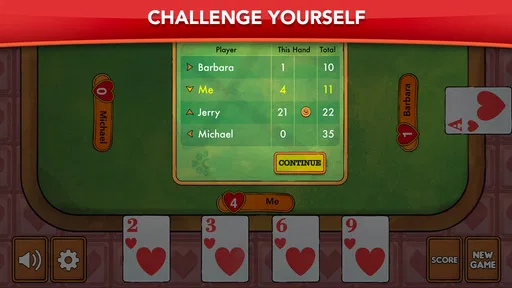
The reward in Hearts - Card Game Classic is mainly the satisfaction of reading a hand correctly. I enjoy finishing a round and realizing that an early decision, such as passing away one awkward card, prevented a much bigger problem later. The score gives the hand a clear conclusion, but the lasting reward is understanding why the result happened.
That makes the game suitable for players who like gradual improvement. I can play a hand, notice that I held a dangerous card too long, and apply that lesson immediately in the next one. The learning is concrete because the mistakes are tied to specific tricks. I do not need to study a strategy guide to see that I should have avoided leading a suit at a particular moment.
The free price also makes it easy to try without committing to a purchase. The app includes in-app purchases ranging from $0.99 to $29.99 per item, so anyone sensitive to optional spending should keep that in mind before playing regularly. I prefer to treat the free entry as a chance to test the core card experience first. If the basic loop does not appeal to you, extra purchases would not solve that problem.
Its Everyone content rating broadens the audience, but accessibility does not mean the game is equally suited to every age or personality. Younger players who enjoy quiet logic may appreciate it, especially when learning to track suits. Someone looking for quick visual stimulation may lose interest because the reward is delayed and depends on making several sensible decisions in sequence.
For me, the best everyday use case is a ten-minute pause when I want something more engaging than scrolling but less demanding than a long-form game. I can begin with one hand, stay focused on the table, and stop after the result without feeling that I have abandoned a larger campaign. That structure also works well for a short evening break, provided I am comfortable with the possibility that one hand will lead naturally into another.
Why another session begins
The reason I often start another session is not simply that the previous one ended badly. It is usually because the next hand offers a different puzzle. A poor pass may have taught me something, while a successful hand may reveal a more advanced weakness in my play. The reset is clean: new cards, new risks, and a chance to use what I just learned.
This reset is especially effective because Hearts does not require a large emotional investment. In a role-playing game, restarting may mean repeating a long section. Here, the previous hand becomes a short lesson rather than a burden. I can try a more conservative passing strategy, pay closer attention to voids, or practice avoiding the lead until I understand the table better.
There is still a limit to that replay value. If you need a strong sense of long-term progression, unlockable content, or a campaign with a changing world, this game may feel too self-contained. Its loop is about refining judgment inside repeated hands, not building an account or collecting permanent advantages. That simplicity is a strength for purists and a weakness for players who need external goals to stay motivated.
Comparing it with other ways to play card games
Compared with Solitaire, this app gives me more uncertainty and more social-style decision-making, even when I am playing against computer opponents. Solitaire can be ideal when I want a completely visible puzzle and a clear personal pace. Hearts is better when I want to infer what other players might hold and make decisions with incomplete information.
Compared with fast multiplayer card games, Hearts feels calmer and more deliberate. There is less emphasis on surprise effects and more on managing the consequences of a card played several turns earlier. That makes it a better choice for someone who likes traditional trick-taking, but not necessarily for someone who wants real-time competition or constant interaction with other people.
It also differs from a physical deck in a practical way. The app removes the need to find three other players, shuffle, or keep track of the score manually. That convenience is valuable when I am alone or have only a short break. On the other hand, a real table still offers conversation, visible reactions, and the atmosphere of playing with friends. This app recreates the decision-making part, not the full social occasion.
The version available is 2.3.3, and the minimum Android requirement is 7.0. That makes it a reasonable option for people using older compatible Android hardware rather than only the newest phones. I would still check the device experience before settling on it as a main card game, especially if you care about display comfort during long sessions. The design of a card table can feel perfectly clear in a short hand but tiring if you play continuously.
Who should play it and who should pass
I recommend Hearts - Card Game Classic to anyone who likes traditional card rules, short repeatable sessions, and decisions that become richer with practice. It is a particularly good fit if you enjoy noticing patterns, remembering what has happened, and improving through small corrections. The free starting point makes it easy to see whether that style works for you.
I would be more cautious about recommending it to players who want a deep progression system, a story, or constant novelty. It is also not my first choice when I specifically want a lively multiplayer event or a game that rewards rapid reactions. Hearts asks me to slow down and accept that a good turn may look uneventful. If that sounds boring rather than satisfying, another card genre will probably suit you better.
For beginners, I suggest playing the first hands as observation exercises. Notice which suits players avoid, resist the urge to win every trick, and judge your decisions by what they make possible later. Once that feels natural, experiment with passing more deliberately instead of simply discarding the highest card. Those two habits reveal most of the strategic depth without making the game feel like study.
For experienced Hearts players, the app is most useful as a convenient practice table. It is not a replacement for the atmosphere of a physical game with friends, but it offers a compact way to keep the core loop available when no group is around. I appreciate that distinction: its value is in making the next hand easy to start, not in pretending that a phone can reproduce every part of a face-to-face card night.
My verdict on the complete play loop
The loop works because each stage leads naturally to the next. I make an opening decision, watch the table respond, receive feedback through the result of each trick, finish with a score and a lesson, then reset with a fresh hand. The reward is not loud, but it is clear: I understand the game a little better and have a new chance to prove it.
After spending time with it, I see Hearts - Card Game Classic as a focused traditional card game rather than an all-purpose mobile entertainment package. FIOGONIA LIMITED keeps the appeal centered on the hand itself, which is exactly what I want when I need a quiet challenge. The optional purchases and occasional hands with limited room for recovery are worth remembering, but they do not erase the strength of the basic format.
My recommendation is straightforward: choose it if you want a calm, repeatable trick-taking game that rewards attention more than speed. It is free to start, suitable for Everyone, and comfortable for short offline or online-style card sessions described by its store summary. Just do not expect a campaign, a social replacement, or a stream of dramatic unlocks. The reason to return is simpler and, for me, more convincing: the next hand gives me another set of decisions, another chance to read the table, and another opportunity to play the cards more intelligently than I did before.
Pros
- Simple rules make it easy for beginners to start playing.
- Offline mode lets you play without Wi-Fi or mobile data.
- Short rounds are ideal for quick breaks or casual sessions.
- Multiple difficulty levels provide a suitable challenge for many players.
- Clean card-table design keeps the gameplay easy to follow.
Cons
- Ads may interrupt play
- especially in the free version.
- Higher difficulty can feel predictable after extended play.
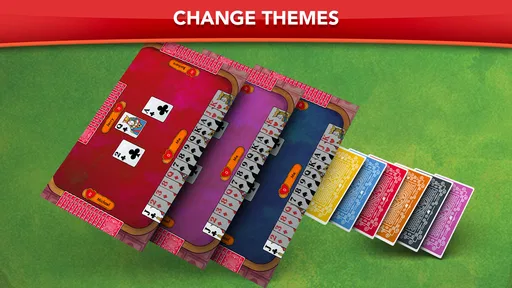
- Limited customization may disappoint players seeking more themes.
- No multiplayer option reduces its appeal for competitive card fans.
- Some features may require in-app purchases or an upgrade.
FAQs for Hearts - Card Game Classic
What is Hearts - Card Game Classic?
Hearts - Card Game Classic is a digital version of the well-known trick-taking card game for mobile devices. You play against computer-controlled opponents, trying to avoid penalty cards while planning when to pass cards and when to win tricks. The app is designed for quick, traditional matches and is suitable for both newcomers and experienced Hearts players.
How do you play Hearts - Card Game Classic?
The main objective is to finish with the lowest score. Hearts generally give one penalty point each, while the Queen of Spades gives a much larger penalty. Players must follow the suit led whenever possible, and the highest card in that suit wins the trick. Depending on the rules used by the app, shooting the moon may let you transfer the penalty points to your opponents.
Can I play Hearts - Card Game Classic offline?
The game is primarily suitable for offline play against computer opponents, which makes it convenient when you do not have an internet connection. Offline availability can depend on the specific version, device, and features offered by the developer. If online functions, advertising, statistics, or updates are included, those parts may require an active connection.
Is Hearts - Card Game Classic free to download?
The app may be available as a free download, although the exact pricing model can vary between Android and iOS and may change over time. Free versions commonly include advertising or optional purchases, such as removing ads or unlocking additional settings. Check the store listing before installing to confirm current costs and in-app purchase details.
Is Hearts - Card Game Classic suitable for beginners?
Yes, it can be a good choice for beginners because Hearts uses straightforward card mechanics and matches can usually be completed fairly quickly. New players should first learn to avoid taking hearts and the Queen of Spades, then practice card passing and trick control. Difficulty settings, if available, can also help users improve gradually.


